



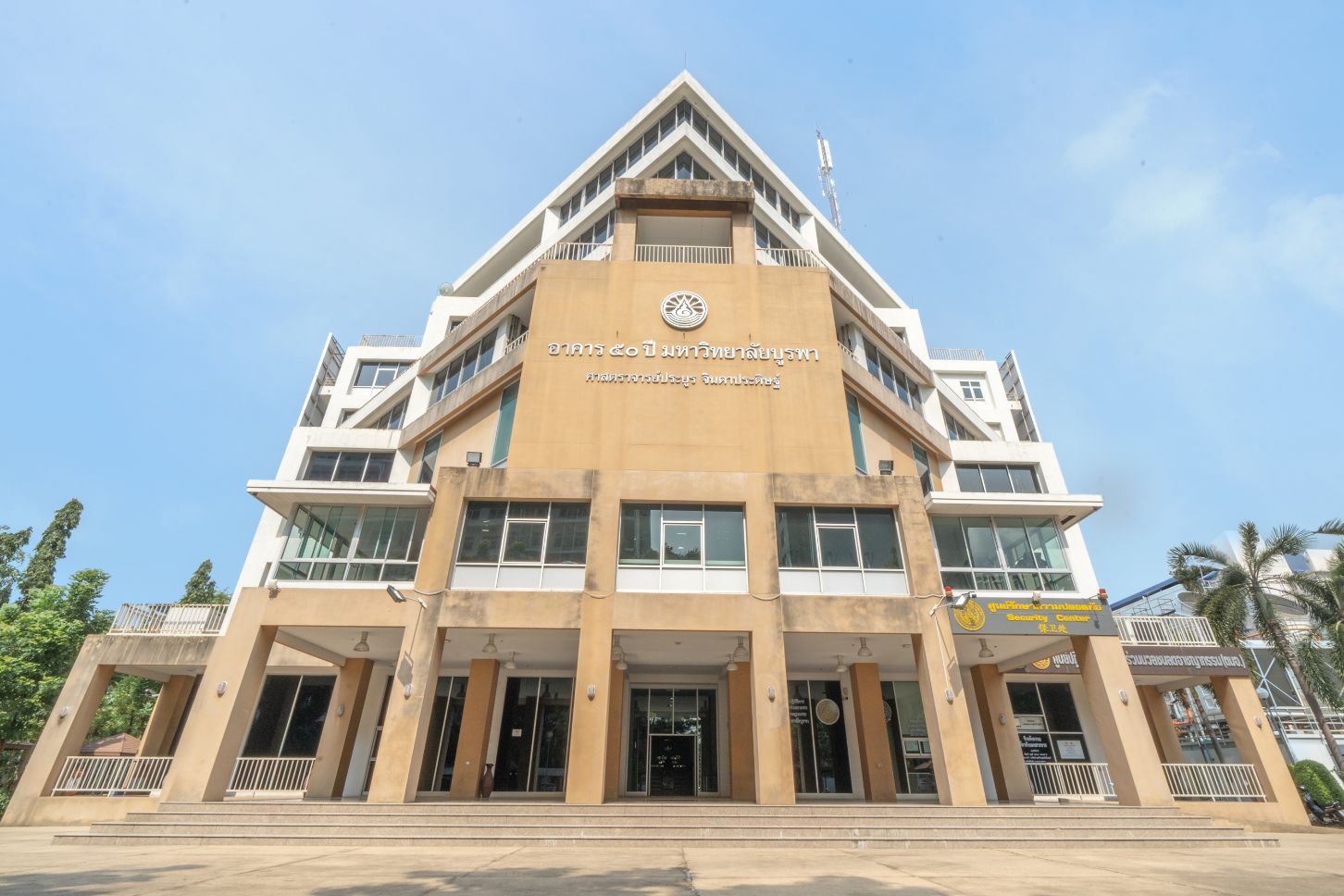
History of the Graduate School, Burapha University
The Graduate School of Burapha University was first established in 1983 and operated until 2008 — a total of 25 years. In 2008, Burapha University transitioned to an autonomous public university. Consequently, the Graduate School was dissolved, and its functions were transferred to the Office of the President, under the supervision of a Vice President assigned to oversee graduate education.
In 2018, the Graduate School was officially re-established, as announced in the Royal Gazette, Volume 135, Special Section 11 Ng, page 55, dated January 18, 2018. According to the Burapha University Announcement on the Establishment of Units and Their Duties (No. 2), B.E. 2560 (2017), issued on December 7, 2017: “(31) The Graduate School shall serve as a central administrative unit responsible for planning, directing, coordinating, monitoring, supervising, developing, promoting, supporting, and managing graduate education within the University to ensure that the programs meet academic standards and maintain quality.” This became effective on January 1, 2018.
The Graduate School was re-established as a new administrative unit on January 1, 2018, and was immediately faced with major challenges arising from the government’s Thailand 4.0 Policy and the 20-Year National Strategic Plan. These initiatives aimed to transform the traditional economy into an innovation-driven economy through the Eastern Economic Corridor (EEC) development strategy. The focus was placed on promoting and advancing research and innovation, developing human resources to meet the needs of the digital era, and cultivating leadership in education, research, industry, and environmental sustainability.
Additionally, the 20-Year Higher Education Plan highlighted the crucial role of higher education institutions in driving national development. Consequently, the establishment of the Graduate School became essential to serve as a central unit for implementing these policies, as well as overseeing and ensuring that graduate education meets the required standards and maintains high quality.
Therefore, it became essential for Burapha University to have a Graduate School to drive these policies and to oversee the quality assurance and standards of all graduate programs.
At present, Burapha University offers graduate programs in 17 faculties and colleges, grouped into three academic clusters:
Group 1: Humanities and Social Sciences (7 units)
- Faculty of Humanities and Social Sciences
- Faculty of Education
- Faculty of Fine and Applied Arts
- Faculty of Political Science and Law
- Faculty of Music and Performing Arts
- Burapha Business School
- International College
Group 2: Health Sciences (5 units)
- Faculty of Nursing
- Faculty of Sport Science
- Faculty of Public Health
- Faculty of Pharmaceutical Sciences
- Faculty of Allied Health Sciences
Group 3: Science and Technology (5 units)
- Faculty of Science
- Faculty of Engineering
- Faculty of Marine Technology
- Faculty of Informatics
- Faculty of Logistics